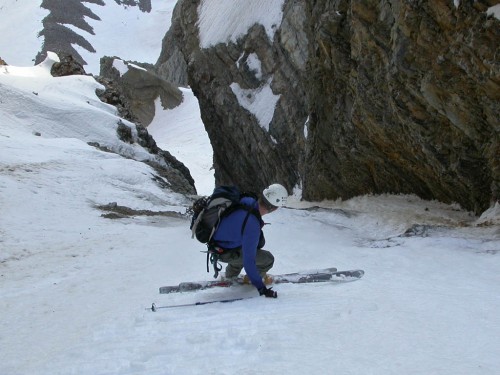
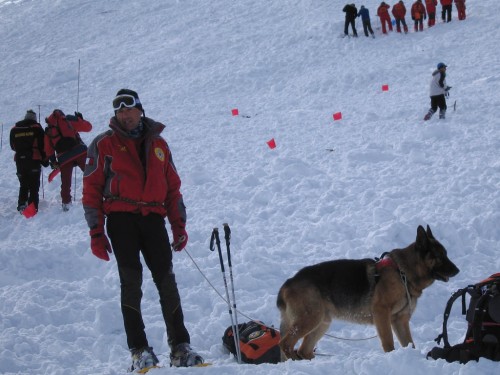
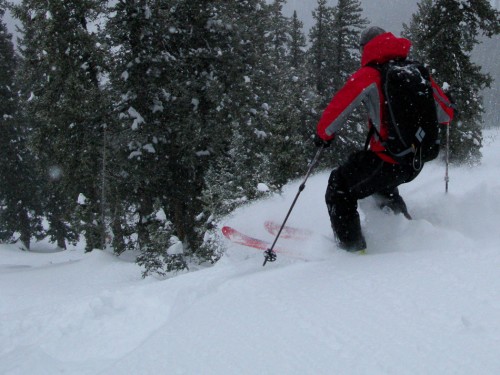
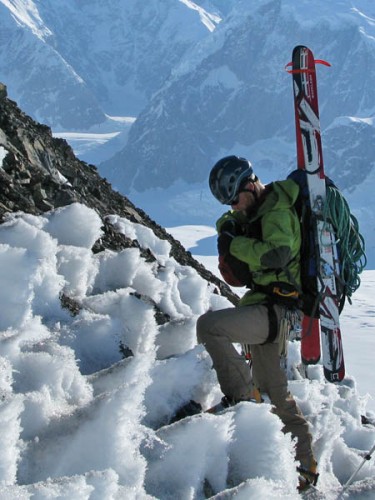
Without a doubt, solid partners are the A-#1 best piece of avalanche gear out there. This doesn’t mean partners who can dig you out quickly, but more partners who are less likely to get you or themselves buried in the first place. Good partners come in all sorts of sizes, shapes, sexes, speeds and ability levels, and sometimes being an uber-rad skier is actually a detriment in a partner. I’ve been on two trips with partners who were very accomplished skiers, yet were livid that I wanted to ski low-angle terrain after waiting out multi-day storms with high winds. One of the better descriptions of an ideal partner came from a eulogy for a French skier whose friend described him as someone who “knew when to hit the gas, but also knew when to hit the brakes.” Last year in the Wasatch was a classic example of riding the brakes almost all season long – I went through two sets of brake pads and almost ruined my rotors because it was such a weird snowpack. The challenges came in finding fun, safe routes and exploring new terrain instead of skiing steep lines. There’s a time and place for almost everything. Continue reading ‘My Most Valuable Piece of Avalanche Safety Gear’
Monthly Archive for December, 2010
I’ve been called a moron for not carrying a probe, but in truth, I’m only a 3/4 moron as I do carry one occasionally, namely on expeditions or when skiing with a large group of people. I like them for expeditions as they serve many uses – marking caches, anchoring tents, probing for crevasses or perhaps body recovery after a big avalanche. I carry them if I’m skiing with a large group of people as the potential for somebody getting caught and buried is much higher with large groups and if there are already three people digging, probing can’t hurt. I’ve carried a probe on the few occasions I’ve guided as it makes me appear more responsible. Probes are also handy for avalanche forecasting work, both for feeling layers and the scale on the side. Continue reading ‘To Probe or Not To Probe’
Tricky skiing today – lower elevations are still not filled in and it was hard to get up much speed on low angle terrain in the deep, heavy snow, but if you went steeper, there was a good chance of triggering an ugly avalanche. It should get better in a day or so.
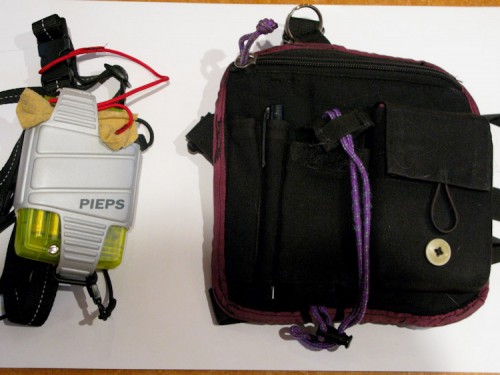
Ahhh, I can feel the pounds falling away. Tomorrow is my first day out with my lighter set-up and I can’t wait/weight.
As mentioned in the last post, I am keeping my heavier Safety Pack and assembling a light one as well.
Things that got the outright chop:
- Goggles – I use wide sun glasses instead.
- Probe – I’ve used a ski pole as a probe before and it worked.
- Avalanche Airbag – I love this thing (BCA Float 30) but there’s no denying it is heavy.
Substitutions:
- Down jacket (MHW Phantom) replaces synthetic (MHW Hooded Compressor).
- Old skool water bladder replaces fancy-ass CamelBak with huge screw-on lid.
Downsizing: Continue reading ‘Enlightenment – Step 2′
The process of reducing my total backcountry skiing equipment weight is harder than it seems. First, there are times when I definitely DO want the full-monty of safety gear and creature comforts, but it is hard to say exactly when that is. For instance, during the past few days the avalanche danger in the Wasatch has been High, but instead of needing more safety gear, I prefer to ski low angle terrain and do safe, exploratory tours instead of steeper skiing. Conversely, when the avalanche danger is low or moderate, I might ski steeper, more exposed terrain, but then there is less avalanche risk, so perhaps I don’t need all the extra gear then either..? Hard to say.
Rather than constantly shuffling gear between packs, I’m putting together two completely separate and different packs – a light one and a heavy one. May the best pack win. ;) The light pack will have a minimal amount of gear, water and food, and will be outfitted for a day of backcountry skiing in the Wasatch, where if you get cold or hurt, you ski ten minutes back to your car and go home.
In the name of weight savings I’m willing to sacrifice a degree of safety (down jacket vs. synthetic, no extra gloves, minimal 1st Aid Kit, etc.,) but there are a few items that are sacrosanct, namely a large shovel and pair of Whippets. I learned the value of a large shovel (G3 AviTech, Voile Telepro, etc) in 1993 when I tried to dig a buried friend out with a tiny mountaineering shovel, which was tragically frustrating. As for the Whippets, if I could have them surgically implanted in my hands, I’d do it as I use them so often and in so many different ways. For long mellow tours, I’ll occasionally use skinny little carbon-fiber pencil shaft poles with Nordic grips on them, but not that often. Give me Whippets or give me death. Continue reading ‘Enlightenment – Step 1′
Gushing rain in biblical proportions all the way up to 7,500′ at night. Grim. Continue reading ‘Wasatch Tweet’
Few topics get the fur flying among backcountry skiers more than discussing the merits of A-frame vs. diagonal ski carrying modes on backpacks. Blood will be spilled. Continue reading ‘A Frame vs. Diagonal Ski Carry’
Growing up skiing at Alpental in the Pacific Northwest, I have one word for any garment aside from rubber which claims to be waterproof – bullshit. (okay, maybe that is a hyphenated compound word, but still…). I was an early adopter to the GoreTex kool-aid and spent many soggy hours denying that I was wet when the spreading diaper rash told a different story. If you wanted to stay dry while riding lifts for 8+ hours in a torrential downpour, you went down to Fisheries Supply and bought rubber gloves, rubber pants, a rubber overcoat and a Macintosh hat that worked with goggles. Two layers of GoreTex (old shells with new ones on top of that) would kind of work for the first four hours, but eventually you’d get wet. This problem was solved twenty years ago when I moved back to Utah where I have skied in the rain exactly once.
With this skepticism in mind, I was highly dubious when Mountain Hardwear announced OutDry about two years ago while we were at a Design Review meeting in Ouray, Colorado. After a day of ice climbing in OutDry gloves my hands were still dry, but that isn’t saying much as Ouray is mostly steep or overhung, so your hands don’t get that wet anyway. At the end of the day when we were done climbing, I stuck the gloves under one of the sprinkler heads that they use to farm the ice and flexed it for a good 5-10 minutes. Still, nothing. Dry hands. Hmmm, well, it could have been beginners luck. Continue reading ‘OutDry Testimonial’
The last couple of times I’ve been out skiing I’ve been moaning and groaning about the weight of my overall backcountry skiing kit and today I decided to do something about it. As soon as I got home from a great day of skiing, I stripped off everything I used and weighed it. Hats, gloves, beacon, skis, pack, jacket, pants, socks, boots, shovel – everything. I bundled all of the loose stuff together in a mesh sleeping bag sack and piled it all onto my hanging scale.
I was expecting it to be somewhere in the 30 pound range, but was shocked and a bit relieved to find out that it came in at 42.5 pounds! Since we have two big dogs, I correlate all my weights to 40 pound bags of dog food, which are not only heavy, but a bitch to carry around, so this is like touring and breaking trail over thousands of feet while packing a big ol’ bag of Iams Healthy Choice. This must get trimmed down. To make matters worse, I ski on what is considered a “light” set-up. I can only imagine what some of the other people I’ve seen out touring are packing. Continue reading ‘New Year’s Resolution – Lose Weight’