Monthly Archive for November, 2010
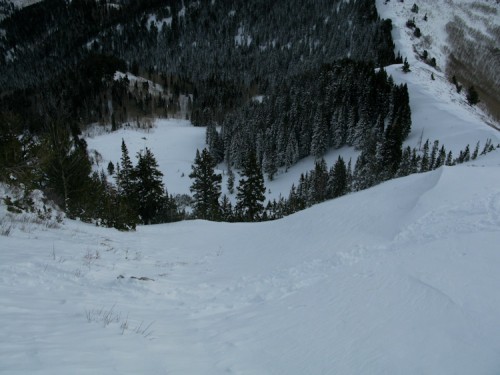
First Run Strategy

Within any single backcountry ski run there usually exists multiple options for skiing more or less avalanche prone terrain.  On the first run of the day, I’ve often formed an opinion on the snowpack by doing mini tests and making observations on the way up (as well as reading the UAC report in the morning), but until I’ve actually made a run, I like error on the conservative side whenever possible.

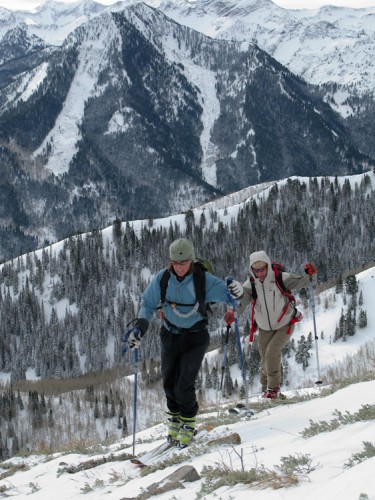
Here’s a photo of our first run of the day on Nov 27th. Continue reading ‘First Run Strategy’

November Pow Update

I’ve updated my Wasatch early season opinion from “Pretty good” to “Best in memory.” I may not have the best memory, but I’ve been out three out of the last four days and haven’t hit a rock except when I was trying to. It is still bony below 7,500′ (approx base of Snowbird), but up high, especially on north facing slopes, it is as good as almost anytime last year. The resorts are all open and seem to be charging away as well.

One of the things that makes this season so good is that the snow has come in in classic Wasatch style – lots of medium sized storms that set up nicely, then get a new layer of refresh on it a day later. The big 100″ storms are impressive, but tend to shut everything down, have high avalanche danger and the skiing is only good for a day or so before it sets up. What makes the Wasatch so good is a pattern of constant refresh, which is what we have had so far this year (fingers crossed in case I jinx it). Continue reading ‘November Pow Update’

Wasatch Photos – Nov 13

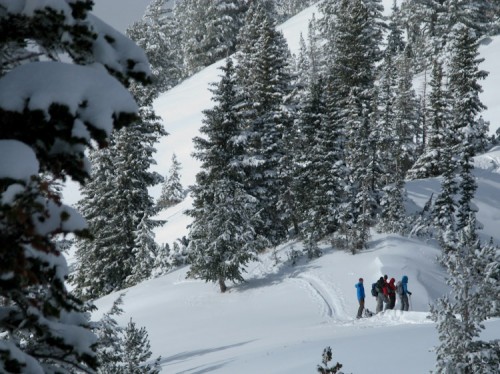
A few photos from last Saturday in the Central Wasatch.  Once you got high enough and on the right aspect, the skiing was fantastic. Continue reading ‘Wasatch Photos – Nov 13′
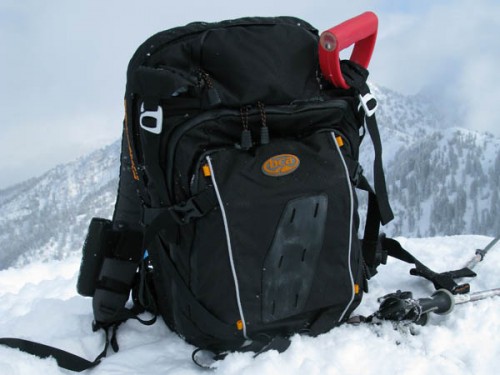
New Airbag Pack for 2010/11

I recently bought a Backcountry Access Float 30 airbag pack and got to take it out for the first time today.  Conditions were stable, so I didn’t get a chance to go for a ride and blow it off, but hopefully I will soon.  (kidding, okay… kidding).

This is the second airbag pack I’ve owned with the first one being an early ABS pack which, although it had an airbag, the rest of the pack was designed by Martians and was completely unusable for backcountry skiing.  The prohibitive price of airbags means that there is a large demand for used ones and I was able to sell the ABS pack for only a small loss, which was a major consideration with buying this new one. If for some reason I really hate it, I probably won’t be out the full price of the bag.  It takes some creative financial rationalization to talk yourself into buying one of these, even though you know deep down in your lungs you probably should.

Airbag packs are proven to be one of the best avalanche survival gadgets out there and if they were the price of a beacon (haaahaahaa) they would be ubiquitous in the backcountry.  As is now, they are up to fifteen times the price of a normal skiing backpack.  I was on the fence about getting one this year until I talked to Doug Workman who deployed one in a massive avalanche and described it as “the hand of God reaching down to save me.”  He was sure he would have died without it, and from my 5-10 avalanche incidents, I can only think of one where an airbag pack wouldn’t have made a difference and that was because the slide was large. Nothing is going to spare you from a Class 5 slide (destroying small towns) but from my experience, most backcountry avalanche accidents are probably in the Class 2-3 range where an airbag will definitely make a difference.

There are three major players in the airbag market – ABS, SnowPulse and BCA.  The ABS was out due to my prior experience with them and although the SnowPulse is a beautiful pack, it comes from $witzerland and is seemingly made by retired hedge fund managers to whom money is no object.  I tried to summon all my financial creativity, but just could not stomach the SnowPulse price tag.  My only hesitation with the BCA bag was that I had seen early crude prototypes of it for over a year and thought it had a long ways to go on the fit & finish.  But, 2010/11 production versions are very well made and detailed. Continue reading ‘New Airbag Pack for 2010/11′

Good to Great BC Skiing above 9k in the Wasatch

I was so excited about my new avalanche airbag pack that I forgot to take photos of the skiing today, but it is amazingly good in the higher reaches of the Wasatch.  Egress and exits are lumpy but aside from that, it was great.  A friend dug a pit at about 10k and reported a 40″ base which is pretty good for this time of year.  Conditions today were soft bouncy powder and many of the trailheads were packed.  Game on for 2010/11?  Maybe.

Warm & Blister-free Boot Fitting

I’m happy to say that I haven’t had a ski boot related blister for years and the last one I did get came from trying to mold my own liners.  Some things are better left to the pros.

Here’s the not-so secrets to my blister free success…

1) Go with boots that fit your feet.  I’ve been skiing in Scarpa’s for years and am not sure if they fit my feet or at this point my feet have conformed to the boots, but whatever the case, Scarpa’s are a known and consistent entity for me.   When I was into Alpine racing I wore a size 7 Lange, but for touring have gone up two full sizes to a size 9.

2) Use a thick, high quality sock like a Bridgedale, Smartwool or one of the new BC.com merino wool versions.  They are pricey ($25ish a pair), but they last forever, or seven years – which ever comes first.

3) Find an insole that fits your foot.  Some of the new boots come with substantial insoles (like the BD line), but I’ve found that SuperFeet fit my foot and are comfy.  I have been rolling them over for about five years and take them out of my old boots, then use them again for my new ones.

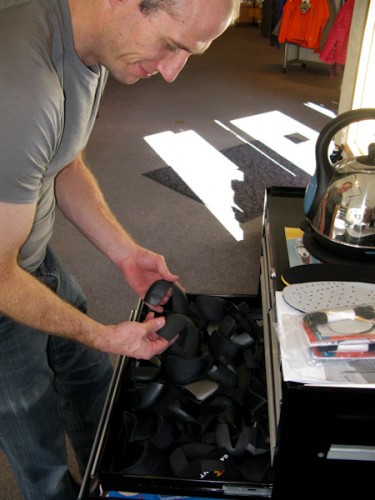
4) Use a good boot fitter who knows how to fit backcountry/touring boots, as a BC fit is different than an Alpine fit.  I’ve been going to Dennis Maw at Black Diamond in Salt Lake City who is a Liner Magician. Continue reading ‘Warm & Blister-free Boot Fitting’