Before being distracted by black books and red leafs, I was talking about slot canyons, and more specifically, the best one I think I’ve ever done – Imlay Canyon in Zion National Park. I suspect it is other people’s favorite as well, as there is even a Canyoneering company named after it.
Utah has had a fairly wet spring and summer, so I was surprised to see that Imlay was almost completely dry. I pussed out and wore a 3/4 wet suit, but everyone else was able to survive in t-shirts and shorts, which is unusual as Imlay can have some long, cold swims, even when it is over 100 degrees outside.
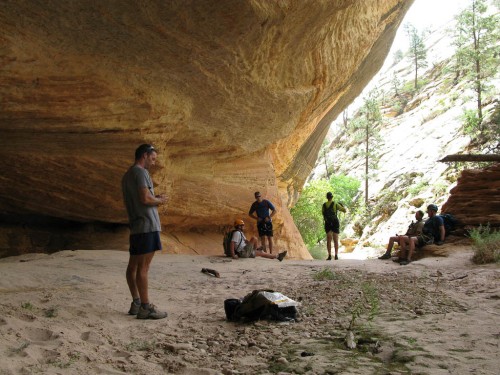
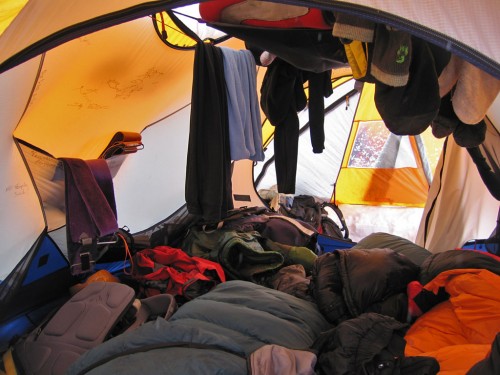
The approach to the start of Imlay is long, hot and semi complicated the first time you do it. The suggested roundtrip time is anwhere from 12 hours to two days. Done as an overnighter, this is the suggested bivy spot, which is right near the start of the action.
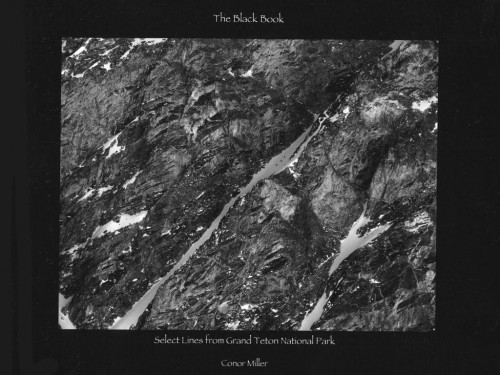
Oh-lala! A squeeky fresh copy of “The Black Book – Select Lines from Grand Teton National Park” by Conor Miller showed up yesterday and I haven’t been this excited about a ski book for a long time. I saw an early draft at the last OR Show, and although it was about 180 degrees outside, it made me want to immediately pack up my skis and head up to the Tetons.
Three little skiers climbing up the Hourglass Couloir on Nez Perce.
Like Utah powder, I often take Utah slot canyons for granted and at times forget how incredibly cool they are. For many years, I sat next to Tom Jones who was a softgoods designer at Black Diamond, and towards the end of his tenure there, he progressively got more and more into slot canyons until he eventually left BD, moved to the outskirts of Zion National Park, started Imlay Canyon Gear and went off the deep end of canyoneering. Good job Tom! :)
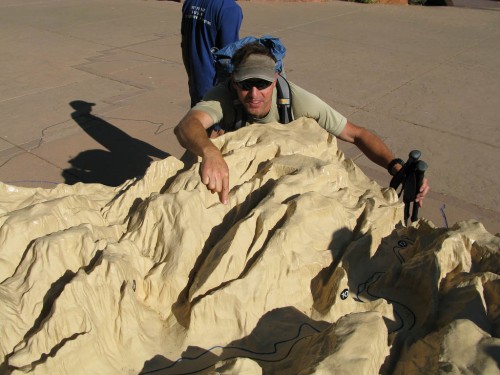
Chris pointing out Behunin canyon. To get there, we climbed the Angels Landing trail, which is the deep cleft to the viewers right of Behunin.
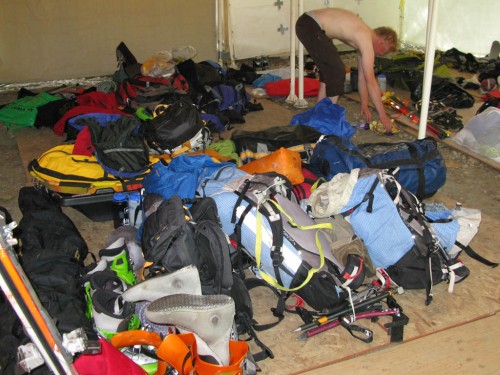
Ray Jardine would be spinning in his grave if he saw this, except for the fact that he is still very much alive and hiking. Ray is a leading proponent of Ultralight Backpacking and often covers up to forty miles a day while carrying an eight-pound pack. At the other end of the spectrum, I recently flew with 225 pounds of food and gear, then proceeded to add another 100 or so pounds of food and gas. It was a staggering about of junk and guaranteed that we weren’t going to be going very far.
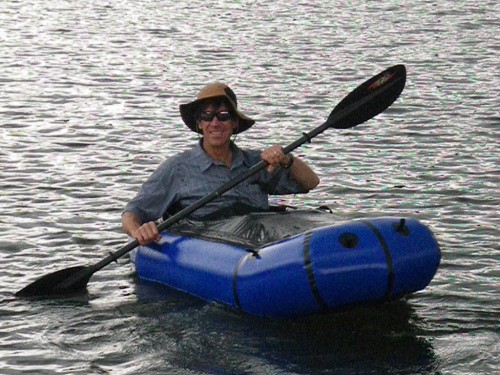
I’d heard about PackRafts from a few adventurously inclined people, but didn’t really get the full picture until I was up in Alaska last spring and had a chance to see a real, live version at the AMH store. In short, PackRafts are very compact, high quality, lightweight personal rafts made out of durable raft fabric (Hypalon?). When collapsed, they are about the size of a single wall, two person tent, weigh 4.5 pounds, and when inflated, they can carry all sorts of stuff, including skis, bikes, or if you are a real Alaskan, a meat bag.
When I first started StraightChuter.com, I took my gear lists for day backcountry ski trips, ski expeditions and technical ski descents and put them on the Gear & Food tab (located about an inch directly above here). Over the last year, the links have all become outdated or broken, so since it is still about 487 degrees in Utah, I have updated them.
The lists can be printed out and used as checklists by themselves, or you can click on the actual item to see what I use, or a close approximation. That said, I’m an “All About the Up” guy, so the gear I like may not have mass appeal. Take it with a grain of salt. StraightChuter is a viewer supported blog, so any gear purchases made through these links will be greatly appreciated!
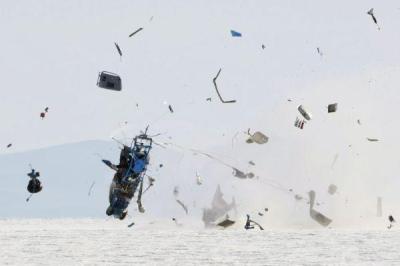
Driver Dies in Speed Week Accident--The Tom Thumb, #216 Coup, driven by Barry Bryant disintegrates as the vehicle rolls near the five-mile marker at the Bonneville Speedway in Utah August 9, 2009. Officials of the Bonneville Nationals report that Bryant, 46, from Anderson, California, died while being transported to a Salt Lake City area hospital. Bryant was traveling approximately 200 mph. at the time of the accident. Photo by Colin E. Braley-RRA/Wild West Media (Colin E. Braley-RRA/Wild West Me)
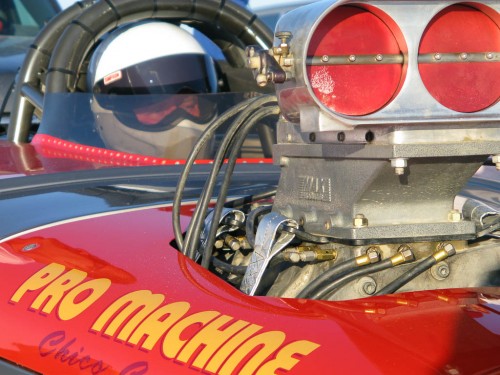
After living in Utah for almost twenty years, I was stoked to finally make it out to the Bonneville Salt Flats over the weekend for the world famous Speed Week. It is one of those places and events that almost defies words. When you first get there, the perfectly flat, glistening white landscape is so bizarre and unique that it makes you wonder what planet you are on. When that thrill subsides, the next thought is “What would be fun to do in a place like this?” To many thousands of spectators and participants, the answer is strap yourself to a bomb with wheels and see how fast you can go. And keeeyrist do people go fast!
My perspective was a bit skewed as the first guy off the line on Saturday morning hit something like 376mph in his “streamliner” which turned out to be the fastest time of the day. After that, 200mph seemed kind of paltry, except when you watched them go by. In general, the machines are wonderfully specialized and barely capable of doing anything other than going really fast in a straight line. Because they are geared so high, many of the cars use a “push truck” to get them up to speed (60ish mph?) before the race car takes over.
My friend, Rod Falkner, described the cars and motorcycles as "controlled explosions with only six to eight rounds in the chamber before they self destruct and need to be rebuilt." Hang on tight.
The Paramount Forge Streamliner was an absolute beauty.
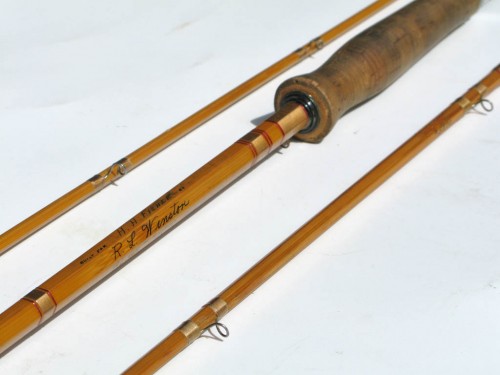
My grandfather grew up in Utah and over a span of years I inherited four unique items from him; a 1969 SS Camero with 16k miles on it, a vintage American flag with 48 stars (when Utah became a state), a fireplace poker set (?) and a custom made RL Winston bamboo fly rod. I abused the Camero and sold it for $900 when it was belching blue smoke and couldn’t make it up the snowy hill to our house, which in retrospect causes me great pain to even think about, especially whenever I see a fully restored SS glide by on the road. Ouch. But, I held onto the fly rod and am glad I did as it is a work of art and has inspired me to get into fishing. While most outdoor gear has a lifespan of about three seasons nowadays, the idea of using a 50+ year-old rod is appealing, especially as I know it meant a lot to him.
The RL Winston 9' 5 1/2 bamboo rod. I have yet to actually use it.