Monthly Archive for January, 2009
Death by a Thousand Missteps

I’m always tormented when I see ragged skin tracks as I feel compelled to say something, yet at the same time it’s hard not to come across as being rude.  “Excuse me my friend, but do you know your skinning technique is all phucked up?”  It’s kind of like seeing someone with an open fly – maybe they like it that way and it is none of my business.  ??  In any case, having an efficient stride is way more important than owning the lightest, sexiest gear as an inefficient stride burns up far more energy than just gliding along.
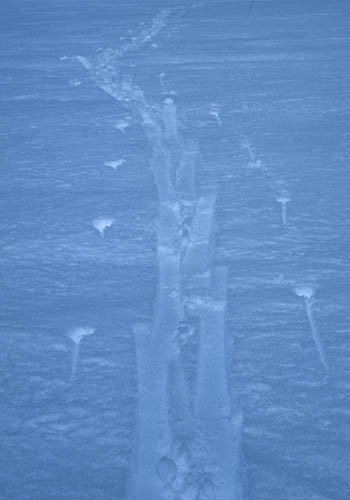
Exhibit A - lift & seperate works well for somethings, but not skinning.

Exhibit A - Lift & Separate works well for somethings, but not skinning.

The Good, The Bad and The Ugly.  Slide & glide is ideal. Slide & stomp is, uhmmm, not so good. Romp & Stomp should be left to the Rec Room.

The Good, The Bad and The Ugly. Slide & Glide is ideal. Slide & Stomp is, uhmmm, not so good. Romp & Stomp should be left to the Rec Room.

Two friends go skinning... the one on the left is working much harder than the one on the right.

Two friends go skinning... the one on the left is working much harder than the one on the right.

There are many potential reasons for ragged skinning technique including mis-mounted bindings, blown boot cant adjustment or just natural physiology.  The first thing to do is just be cognizant of it, which usually fixes the problem and then with enough thought and practice, an efficient stride becomes habit.  Think of two pointy arrows sliding in parallel over the snow.

________________________________
Help support StraightChuter.com and slide along with a pair of Scarpa F3 Alpine Touring Boots from Backcountry.com. Click on the photo below…
 

It’s All About the Up

Coming from an alpine skiing background, it took me a few years to warm up to the idea of backcountry skiing. It didn’t help that the guy I learned how to backcountry ski from was wicked-fast, which meant my early outings were exhausting efforts of trying to keep up where all I could think was “I’m cooked. We only made five runs today and I could have done five times that at Solitude.” I kept a season’s pass in reserve until one day we skied Lisa Falls in thigh-deep sub 5% powder, which set the backcountry hook for once and all. Since then I’ve done way more backcountry skiing than riding the wire, and like any addictive substance, the further you get from it, the less you miss it. As cyclist Greg LeMond said “It doesn’t get any easier, you just get faster.”

Mona Lisa Falls Overdrive. You can't get there by helicopter, sled or chairlift. Alex Lowe points the way towards 5,000' of pure fluff.

The key to enjoying the hiking/touring aspect of backcountry skiing is to do it enough that you find your own rhythm and stop fighting the pain. I think of it like mountain biking, trail running or rock climbing – the uphill exertion part is a fun challenge and the downhill is the icing on the cake. Human powered ascent gets easier the more you do it and at some point it becomes fun in itself. Beyond that, when you start to mix in route finding, team work, trail breaking and avalanche assessment, the ascent becomes an intricate challenge with the final skin track becoming a piece of backcountry artwork. Skin tracks are a reflection of the people who put them up, and like reading a good book, a tight skin track makes you want to meet its author. “Hmmm, three people swapping leads with no breaks, full heel pegs, tight switchbacks around the rocks, nice cornice stomping and they avoided that fat pillow – must be Derek and Co. Very nice.”
Tight tracks up Tanners.  Skinning and photographic artists unknown.

Tight tracks up Tanners. Skinning and photographic artists unknown.

I love the up.

________________________________
Help support StraightChuter.com and learn to love the up with Black Diamond Ascension Nylon STS Skins from Backcountry.com. Click on the photo below…

Wasatch BC Skiing Park & Rides

With Salt Lake City being so close and the access to the Tri-Canyons being so limited, most Wasatch backcountry skiers end up carpooling for all or part of their trip up to the trailheads.  There are seven or so Park & Rides to chose from and the choice of where to meet can sometimes be more difficult than where to ski.  If I hadn’t wasted so much time thinking about all of the various Park & Ride permutations, I could have been a Cardiologist.

A big factor for me is that I HATE getting my car broken into, so I avoid LCC and BCC as much as possible as they are plagued by vermin who will smash your window for the pennies in your change drawer.  Cowboy Partners is nice, but you are out of luck for food, shopping or poo’ing.  I like the Swamp Lot, but you have to double back to get to BCC.  The 7-11 Mud Lot is central and has easy access to beer, but don’t drop your glove there.

There are so many factors that it boggles a single-celled ski mountaineering brain.  Technically the Big Cottonwood Park & Ride is the best and the quaint little 3800 lot is the worst, but it all depends on where you are going.

I go for 3900th whenever possible (easy freeway access, longest carpool, nearby shopping and getting cuter by the minute) with the Swamp Lot being a close second (surrounded by houses and roads, so less theft, and central for many Sandy partners).

________________________________
Help support StraightChuter.com and take the guesswork out of finding a Park & Ride with a Garmin 60 CSX GPS from Backcountry.com. Click on the photo below…

Chuting Spree Clue #2 – Mountain Hardwear Tent

Follow five weekly clues and be the first to correctly identify where the tent is hidden to win a Mountain Hardwear tent of your choice!

Click here for the Chuting Spree Mountain Hardwear Tent contest rules.

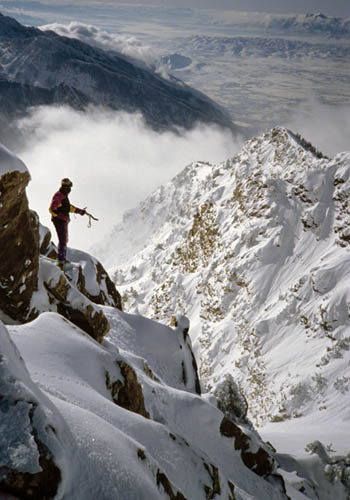
Clue #2:  This skier comes from a famous skiing family and was a Big Mountain Freerider 25 years before the term was even born.  He/she flew a hang glider off the north side of Mt. Everest and was the first person to break the elusive one-hundred and twenty-four point three miles per hour barrier on skis. Sadly, this person died while sleeping in a car which was rear-ended by a drunk driver.

What COUNTRY is this person from? 

Name that skier, or at least the COUNTRY he was from.

Name that skier, or at least the COUNTRY he/she was from. Photo credit withheld until the end of the contest.

Know the country?  Don’t answer now – save it for Super Cluesday.

Clue Schedule:
January 20th – Continent
January 27th – Country or Region
February 3rd – Specific mountain range or zone
February 10th - Specific peak or town
February 17th – SUPER CLUESDAY!  Exact location.  Send in your answer NOW!

________________________________
Help support StraightChuter.com and camp in style with a Mountain Hardwear Spire 2 Tent from Backcountry.com. Click on the photo below…


The Mountain Hardwear Spire 2 is an ultralight 2-person 4-season double-wall tent for alpine climbers and mountaineers who like to move light and fast in the high mountains. The Spire’s double doors are each protected by a vestibule to allow you and your partner to enter the tent without getting snow inside. The double vestibules are also excellent for cooking in a storm and storing gear. At 4lb 9oz, this Mountain Hardware tent weighs far less than most 4-season double-wall tents while remaining strong enough to withstand horrendous winter storms. Light enough for an alpine style assault and burly enough for a fixed camp, the Spire is an incredibly versatile mountaineering tent.

Bottom Line: Travel light and camp comfortably with the Mountain Hardwear Spire 2 tent.

My Best Powder Day of the Year

A short photo Trip Report (TR) to pass the time until 10:00am when the Chuting Spree Clue #2 comes up…
With dubious weather and no real objectives, I was planning on just going out for a few turns with Polly today, but the Wasatch had something else in mind, namely one of the best powder days of the entire season.  The recent storm came in warm and bonded well with the old snow before slowly getting colder and colder, while adding on up to 36″ of new.  The skiing was insanely good and surprisingly stable, although if the high winds that are forecast in the next few days come through, this particular powder party will be over.  But, it was good great excellent while it lasted.
 

Toledo Bowl, Toledo Chute, Pole Line Pass, Little Superior and Superior doing a J.R.R. Tolkien Middle Earth impersonation.

Bruce Edgerly, Vice President of Marketing at Backcountry Access, Inc. This counted as a business meeting, so I'm writing it off my daily expenses (1/10th of three AAA batteries) on my taxes.

Adam from Backcountry Access in Papaya Days.

Andy from Backcountry Access busting pow.

Pregnant Polly poaching powder. The little one was doing blind-mute-grabs of joy.

 ________________________________
Help support StraightChuter.com and measure angular joy with a Backcountry Access Slope Meter from Backcountry.com. Click on the photo below…


Ten in Ten Notes

Between ten days of skiing and then having the Outdoor Retailer show come into Salt Lake City, it has been a good reminder of how fortunate I’ve been to have so many excellent skiing friends.  I’ll occasionally go skiing solo, but it is people and friendships that really animate the mountains for me. Below, I’ve attached a few photos from friends who partook in the 10 in 10 descents.

AM sinking into the upper Needle.  photo: noah howell

AM sinking into the upper Needle. photo: noah howell

Strategy
North facing lines are a bit of a double-edged sword, which is why I decided to ski them all first.  They preserve powder longer than other aspects, but can also have lingering avalanche danger.  They can go from being “in” to dangerous with just a small storm, then remain that way for 4-5 days (or longer), so my philosophy is to ski them when you can, then leave them alone when they are sketchy.  South facing is just the opposite, where the slopes don’t preserve powder for very long, but they tend to stabilize quicker.  With any luck, south facing slopes will cook down within a few days, so even if you miss the 24 hour powder period, after that it doesn’t matter as much whether you are a day late or five days late as you’ll be skiing firm snow either way.  East and west facing slopes (known as “the off-aspects”) are somewhere in between and can be a crap shoot.  The Needle is east facing, but because it is in such a deep cleft, it stayed soft.

AM sliding into the lower entrance to the Pfieff. photo: jared inouye

The lines and the approximate vertical to climb/ski them:

The Y-Couloir – 3,200′, north, 2-4 hours RT
Argenta – 3,250, north, 2-4 hours RT
Stairs Gulch – 5,000′, north, 3-5 hours RT
NW Couloir of the Pfiefferhorn - 4,750′, NW, 4-6 hours RT
Coalpit – 5,000′, north, 3-5 hours RT
NE Couloir of Lone Peak - 7,750′, north, 6-8 hours RT
The Hypodermic Needle - 4,990′ east, 4-6 hours RT
Lisa Falls - 5,000′, south, 5-7 hours RT
Little Pine – 3,300′, south, 2-4 hours RT
South Face of Superior - 3,000′, south, 2-3 hours RT

Total Vert = 45,240′

As a few partners pointed out, it would have been far easier to lump a bunch of these together (Pfieff, Needle & Coalpit can all be done in a day), but that would be beside the point of a Top 10 in 10 project.  The name “The Chuting Gallery” originally came from a day tour that connected the NW Couloir of the Pfieff, then The Hypodermic Needle with a finish out the Y-Not just for good measure.

Chain gang of big booter luv in the Y-Couloir. photo: courtney phillips

Picking the Lines
I had picked out about seven definite “classic” lines and had a list of five or so others, but after skiing the first whack of them I decided to keep the top ten list to the central Wasatch.  Areas like Timpanogos, Nebo, Box Elder or the Wellsville range are not only slightly removed, but are also so big that you could almost pack in ten classics in each of them alone.  Of these areas, the big classics would include Cold Fusion on Timp, Box Elder and the NW (?) Couloir on Nebo.  Other considerations might be some lines in Wolverine Cirque (steep, but short), Heart of Darkness (great visuals, so-so skiing), Tanners (big, but undulating) and a few others.  In the right conditions, its hard to go wrong.

A helpful perscription from a friend who was along for one of the rougher rides.

A helpful prescription from a friend who was along for one of the rougher descents.

As a side-note, with the twenty-plus inches of new snow Utah received in the last two days and with more on the way, I wouldn’t ski any of these lines right now and it is back to low-angle trees, or Geh Flat Powder as Dylan says.

________________________________
Help support StraightChuter.com and keep your legs warm, dry and comfy with a pair of Mountain Hardwear Vertical Pants from Backcountry.com. Click on the photo below…

Top 10 in 10 – South Face of Mt. Superior

#10 – The South Face of Mt. Superior

If the Wasatch Mountains were to have one single classic mountain face, it would have to be the South Face of Mt. Superior.  It has been memorialized on the label of Wasatch Beers “Superior Ale” and anyone who has skied Alta or Snowbird can’t help but look up and see it.

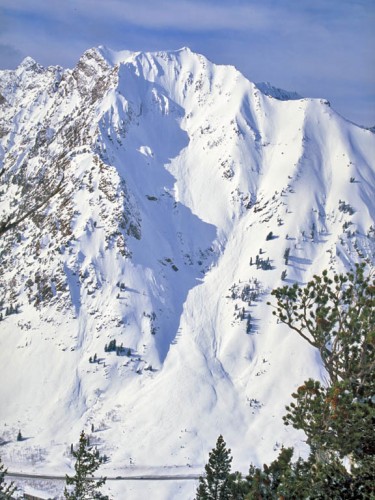
The South Face of Mt. Superior.  It would be sacrelige and redunant to put a red route indicating line on this beauty.  Start at the pointy part and ski it to the bottom.  Note the cars on the road below for scale.

The South Face of Mt. Superior. It would be sacrilege to put a red route indicating line on this beauty. Start at the pointy part and ski it to the bottom. Note the cars on the road below for scale.

At first glance, Superior almost looks too steep to ski, but once you get a proper side view of it, most of the face is a very skiable 30-40 degrees.  It starts with a classic pointy summit, opens into a steep hanging snowfield, filters through a series of tight chutes (the crux), then hits a diagonal collector ramp which finally funnels skiers onto huge, wide open aprons.  In true Wasatch style, you can ski every last inch right to the road for a run that measures out to almost exactly 3,000′ vertical feet.

The South Face is almost like a ski area unto itself with variations like Little Superior (aka Inferior Superior), Suicide Chute (aka Country Lane), Pinball Alley and many other alternate lines.  Facing due south, it gets maximum amounts of sun, but some also has some deep dark features that, against all logic, shelter and protect pockets of powder.  It’s not uncommon to get anything from glare ice to soft powder, and everything in between, on a single run down Superior.

A video from Derek Weiss (Piton Productions) showing Superior as it should be:


In many ways, the South Face of Superior is the perfect antithesis of the Y-Couloir, which was the first ski descent of this project.  The Y is low elevation, north facing, narrow and sheltered, whereas the SF of Superior is high, south facing and wide open.  Oftentimes when one is good, the other will suck, as was the case today when Mother Superior was in the foulest mood I’ve ever seen her in with rocks, ice, flat light, frozen debris and rock-hard ski tracks.  To cap it off, halfway down it started to rain.  On the positive side, I had the entire slope all to myself.

The SF of Superior today - so bad it was... bad.  Flat light, rain, rocks, ice, frozen debris and low snow, yet still great just to be there.

The SF of Superior today - so bad it was... bad. Flat light, rain, rocks, ice, frozen debris and low snow, yet still great just to be there.

Superior can be ascended by going straight up the South Face (popular in the spring as alpine climbing practice), but most of the time it is summited via the shapely and aesthetic east ridge, which starts at Cardiff Pass (aka Pole Line Pass) right above the quaint hamlet (?) of Alta.  In a fat snow year, the ridge can be done entirely on skins, although most of the time there is a nice booter in for the final quarter of it.  One of my favorite sections of the entire outing occurs right near the summit where a rock rib forms a wild catwalk in the sky with big air on each side.

Kip and Courtney skinning the catwalk on a previous ascent of the east ridge of Superior.

Kip and Courtney skinning the catwalk on a previous ascent of the east ridge of Superior.

As a bit of Superior trivia, the true summit of Mt. Superior is what backcountry skiers commonly call “Monte Cristo.”  The summit that is commonly skied from is unnamed.

Tomorrow: New snow?

________________________________
Help support StraightChuter.com and ski Superior with the superior Mountain Hardwear Spearhead Mitten from Backcountry.com. Click on the photo below…
 

Top 10 in 10 – Little Pine Couloir

#9 – Little Pine Couloir

I’ve heard there are over 32 slide paths that hit the Little Cottonwood road, and much to UDOT’s dismay, one person’s slidepath is another person’s idea of an excellent ski descent.  As you drive up the LCC road towards Alta, the big south facing guns stack up one after another on your left-hand side and are conveniently marked with signs like “Tanners Slide Path.”   Access to these monsters is about as hard as opening your car door and stepping out – voila, you are now on route. (note: you do have to watch where you park or you’ll get towed.)

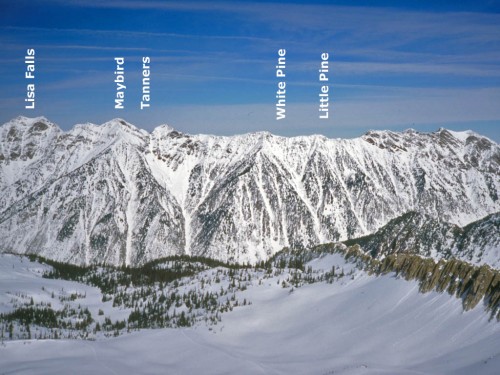
Stack em up - The south facing LCC lines ranging in length from 3,000 to 5,000

Stack'em up - the south facing LCC lines ranging in length from 3,000' to 5,000'.

Conviently marked for your night skiing pleasure...

Conveniently marked for your night skiing pleasure...

Of all of the slide paths, Little Pine is the purest in that it is almost a perfectly straight 3,000+ foot line from the ridgetop all the way to the valley floor.  Starting from the White Pine trailhead parking lot, you cross the street, then skin or boot the apron for a few minutes until you enter the main chute.  From here it is an eternal StairMaster of left/right, left/right booting until you hit the top.

The top of Little Pine Couloir looking over toward Snowbird.  photo: courtney phillips

The top of Little Pine Couloir looking over toward Snowbird. photo: courtney phillips

Soft light and hard snow in Little Pine Couloir with the LCC road below.

Soft light and hard snow in Little Pine Couloir with the LCC road below.

Being south facing means that it gets the maximum amount of sun, which is good at times (spring corn, faster powder stabilization, etc.), or, like today, can make for some absolutely horrendous skiing.  Luckily Courtney Phillips was along for the ride and understands that oftentimes it doesn’t actually have to be fun, to be fun.  The entire line was a frozen mess of ski tracks, sun cups and frozen avalanche debris.  There was no talk of going back for a second lap.

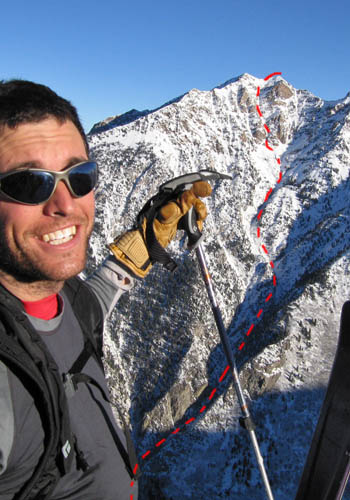
Skiing the flanks of Little Pine with the Pfiefferhorn, Needle and Coalpit in the background.  My ears are still ringing from this descent.  photo: courtney phillips

Skiing the flanks of Little Pine with the Pfiefferhorn, Needle and Coalpit in the background. My ears are still ringing from this descent. photo: courtney phillips

We knew this going into it and there’s nothing like some hack n’ jack skiing to make you appreciate good conditions.   If anything, today’s descent will go down in the memory banks as one of those “Remember that time skied Little Pine and it was so rough and icy our legs felt like paint-shaking machines?”  Oh well.

Noah Howell and the PowderWhores skied Little Pine a week or so ago and put together this  video which does the great line justice:

Tomorrow: Mother Superior
________________________________
Help support StraightChuter.com and shoot POV video like a PowderWhore with a V.I.O. POV.1 Camera Package from Backcountry.com. Click on the photo below…

Top 10 in 10 – Lisa Falls

#8 – Lisa Falls

With a vertical drop of 5,000′, Lisa Falls is the biggest of all the magnificent south facing couloirs that line Little Cottonwood Canyon.  When I first skied it roughly fifteen years ago in knee-deep sub 5% powder on a clear, sunny day, it was such an incredible experience that it sold me on the virtues of backcountry skiing and I’ve hardly been back to the resorts since then.  A trip down Lisa Falls is an epic adventure, with a headwall, upper couloir section, middle aprons, lower couloir section, a rappel (most likely), then a tight lower that suddenly spits you out right onto the LCC road.  Being south facing, it is hard to get in powdery conditions, but the skiing is almost secondary to the overall experience anyway.

Noah Howell pointing out the big gal from across the valley.

Lisa Falls starts right at the gap between the two peaks that form Twin Peaks and slithers all the way down.  When conditions are right, my approach of choice is to go up the Tanners slide path, then drop a nice north-facing powder shot before climbing back up to the ridgeline and over to the summit of Twin Peaks.

Jared Inouye booting up Tanners at first light.
Bart Gillespie following my "Lost Again" line.  This is avoidable if you remember to look around and follow the ridgeline.
Bart Gillespie following the “Lost Again” variation.We climbed until the earth fell away in all directions around us.

A cool aspect of Lisa Falls is that it is so huge that at some point you are likely to find good skiing.  Today’s outing had everything from bullet-proof ice to chudder-mank avalanche debris, wet slop, rocks, powder, running water, corn and breakable crust.  It is all just part of the package. 

Noah digging into some yummy debris.

Jared entering the middle couloir zone.

Part of the appeal of skiing Lisa Falls is that it takes every trick in the book to make it down in one piece.  There’s climbing, sideslipping, rock hopping, rappelling, great skiing and crap all rolled into one.

Noah Howell leaping for joy in Lisa Falls.  Ironically, he stuck the landing,

The rappel in Lisa Falls is almost more of an annoyance than anything.  It can be avoided by skirting hard left, but you are trading lots of little miseries for one big one.  I prefer to just set an anchor (a piece of wood as a deadman backed up by a sketchy willow tree) and get it over with.  I’ve misunderestimated (see you W – have a nice life) how long it is twice and ended up leaving my ropes both times as I’ve had to tie them off full-length and leave them.  Such is the price of having fun and there is more rope where this came from.  :)

Tomorrow:  Looking for a little love…
________________________________
Help support StraightChuter.com and pick up the ultimate ski jacket on earth, the Mountain Hardwear Vertical Jacket from Backcountry.com. Click on the photo below…


Chuting Spree Clue #1 – Mountain Hardwear Tent!

Follow five weekly clues and be the first to correctly identify where the tent is hidden to win a Mountain Hardwear tent of your choice!

Click here for the Chuting Spree Mountain Hardwear Tent contest rules.

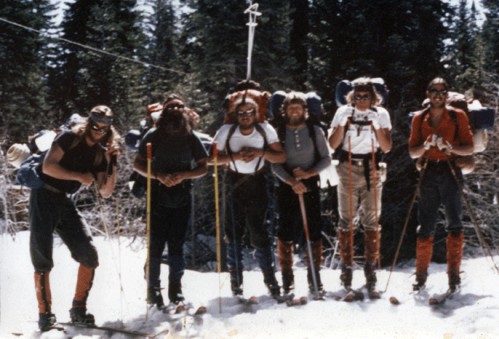
Clue: In 1995, after numerous attempts by many strong parties, two skiers from this CONTINENT laid first tracks down this twelve-thousand, nine-hundred and seventy-two foot peak, which is the highest peak in its range.  At least one of the skiers was on borrowed gear.

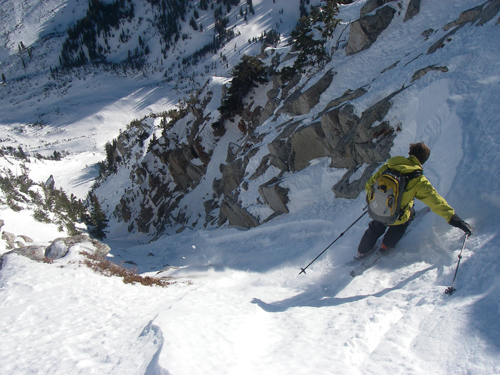
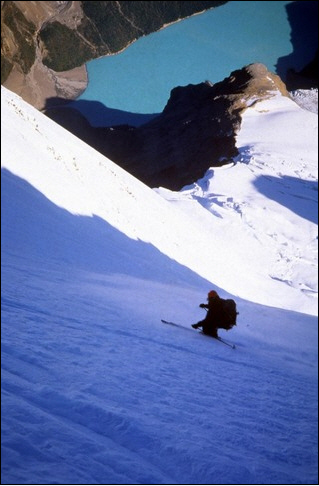
Sketch-ee-mo Johnson. A skier from the continent in question working his/her way down the peak in question.  Photo credit respectfully withheld until the end of the contest.

Sketch-ee-mo Johnson. A skier from the continent in question working his/her way down the peak in question. Photo credit respectfully withheld until the end of the contest.

Know the continent?  Don’t answer now – save it for Super Cluesday.

Clue Schedule:
January 20th – Continent
January 27th – Country or Region
February 3rd – Specific mountain range or zone
February 10th - Specific peak or town
February 17th – SUPER CLUESDAY!  Exact location.  Send in your answer NOW!

________________________________
Help support StraightChuter.com and camp in style with a Mountain Hardwear Casa 4 Tent from Backcountry.com. Click on the photo below…
 

Mountain Hardwear used a unique pole structure to make the Casa 4 four-person, three-season tent easy to pitch and spacious inside. This four-person tent has only two poles. One pole arches over the entrance, branches at two side hubs to create sidewall support as well as roof support, and snakes to the back of the tent. The other pole helps hold up the back end of the tent. Aside from easy setup, this structure results in nearly vertical walls, so you can use more of the Casa 4′s interior space. Put on the fly, and you get 22 square feet of vestibule area as well as a watertight fortress against the elements. In warm weather, leave off the fly and enjoy the breeze through this Mountain Hardwear tent’s mesh windows.

Bottom Line:
Mountain Hardwear’s Casa 4 is your spacious mountain home for friends or the whole family.